
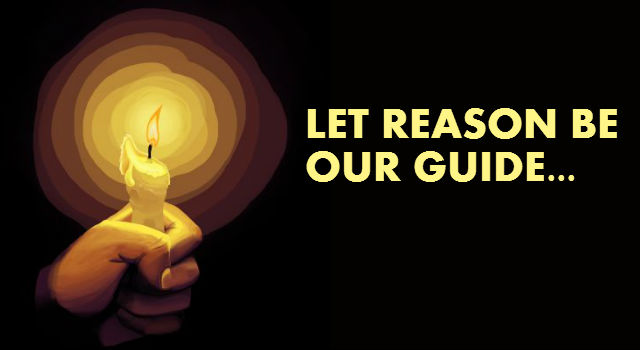
For about fifteen years, I was a committed fundamentalist evangelical Christian. I went on mission trips, canvassed door to door, preached Jesus on street corners, volunteered 5 nights a week at multiple churches, taught classes on apologetics, donated lots of money to multiple churches, fed the homeless, led people in prayer, and debated with non-Christians (both online and in person). For all intents and purposes my “fruits” were good, very good. I wasn’t casually religious. I was serious. Passionate. Extremely devoted. Certain.
And I was wrong.
Not wrong about everything. Not insincere. Not malicious.
But wrong in the most important way: I was mistaken.
The Cracks Begin to Show
Over time, I was challenged by a wide range of people — former Christians, people from other denominations or religious traditions, college professors, authors, online writers, and thoughtful skeptics. These weren’t the caricatures I had been warned about. They were intelligent, patient, and often far more informed than I was.
The more I engaged with them, the more uncomfortable I became.
I began to realize that I was guilty of the very thing I accused others of: irrational thinking.
That realization wasn’t immediate, and it wasn’t easy. It was the beginning of a long and often painful process of intellectual deconstruction.
Improved Thinking Skills
During this time period, I immersed myself in education.
I took college courses in logic. I studied critical thinking in depth. I read extensively on logical fallacies, cognitive biases, and the psychology of belief formation. I debated — a lot. Over ten years of online and in-person debates, first as a Christian, then as an atheist.
Those debates were transformative.
They exposed how often human beings — myself included — reason backward from conclusions toward a desired outcome (“guiding the evidence” instead of letting the evidence lead). We often start with what we want to believe and then find arguments in defense of it. We cherry-pick. We rationalize. We ignore counter facts.
And we sincerely believe we are being objective. But we are mistaken.
The more I learned about cognitive biases and the fallibility of the human brain, the more I understood something sobering:
Irrational thinking is far more common than most people realize.
Beliefs Have Consequences
One of the most important insights I gained was this: beliefs are not isolated. They shape behavior.
When beliefs are grounded in poor reasoning, the consequences very often ripple outward.
We see this all over the place:
- People mistreating others based on race, gender, sexual orientation, or philosophical and/or religious identity.
- Citizens voting for policies or politicians based on demonstrably false claims.
- Governments passing laws rooted in misinformation or fear rather than evidence.
Bad reasoning doesn’t stay in the realm of ideas. It becomes policy. It becomes culture. It becomes harm.
This is why the stakes matter. This is why beliefs matter.
As Harvard Professor Stephen Pinker has pointed out, societies flourish when their people and institutions become more rational. When evidence matters. When reason outweighs dogma. When we are willing to revise our beliefs in light of better arguments and better data.
Why Light of Reason?
I didn’t launch Light of Reason because I’m anti-religion (in fact I have many loved ones and close friends who are theists). If someone believes in God (or a “higher power” of some kind, or variation) I’m fine with that, in so far as their belief(s) don’t negatively affect society. I launched LOR because I am pro-reason, pro-critical thinking, and pro-science, and because I noticed a growing anti-intellectual, anti-critical thinking, and anti-science sentiment in society (specifically pouring out from social media and mainstream media).
Light of Reason exists to promote:
- Critical thinking
- Logic
- Intellectual humility
- Awareness of cognitive biases
- Evidence-based reasoning
- Science (and the scientific method)
- Philosophy
- Proper Argumentation
My journey from certainty to skepticism was not about abandoning meaning. It was about seeking truth more honestly.
If there’s one lesson I’ve learned, it’s this:
We are all susceptible to error. Every one of us (big time). The human brain is powerful, but it is also prone to making mistakes.
The solution isn’t cynicism. It’s better tools and a willingness to grow.
Better reasoning.
Better debate.
Better epistemology.
Better habits of thought.
Light of Reason is my attempt to help build those tools — in myself and in others.
Because when our thinking improves, our institutions improve.
When our institutions improve, people flourish.
And that’s something worth working toward.
Holding the Light
The original Light of Reason logo created back in 2014
































Leave a Reply